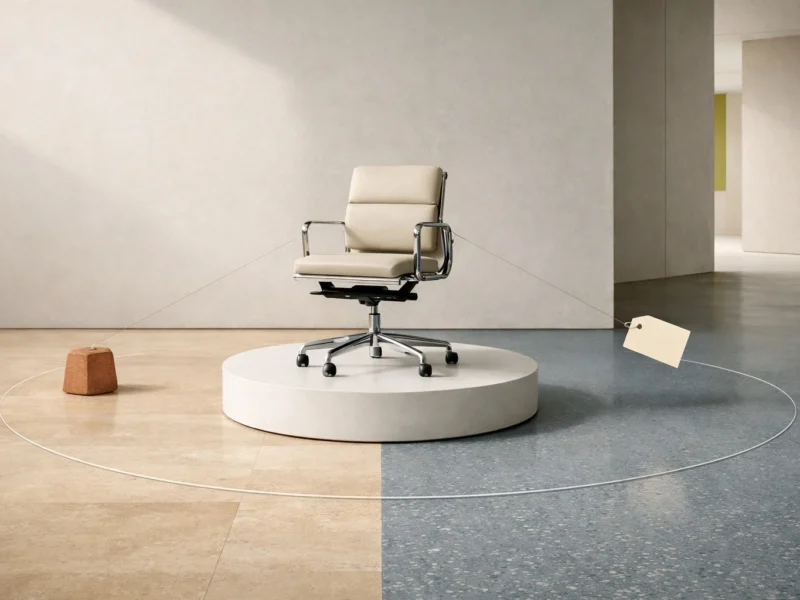
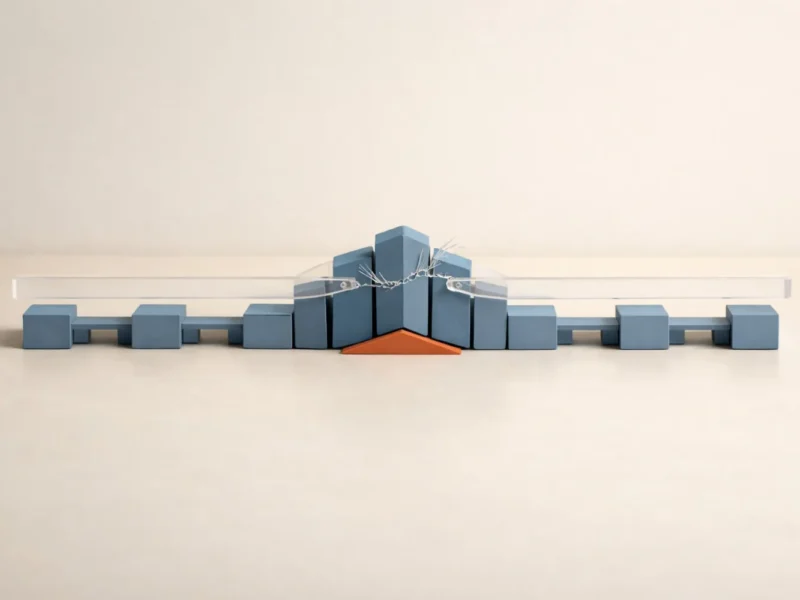
The Workspace Alignment Index™ is a structured self-assessment that measures workspace performance across cost, space, people, and future readiness, turning diagnosis into strategic decision-making.
Most organizations know their rent. Some track operating costs. Very few can answer a more fundamental question: is our workspace truly aligned with how our business works, economically, spatially, and organizationally? The Workspace Alignment Index™ (WAI) is a structured self-assessment tool designed to answer exactly that question. It evaluates workspace performance across four critical dimensions and produces a composite score that allows organizations to understand where they stand, where the misalignment is embedded, and which decisions to prioritize.
The WAI is intentionally a diagnostic tool. Its purpose is not to prescribe solutions, but to make the invisible visible, surfacing the gap between the workspace an organization pays for and the value that workspace actually delivers.
What the WAI Measures
The Workspace Alignment Index™ is built on four integrated dimensions, each weighted within the composite score.
Economic Efficiency assesses how workspace costs are governed, monitored, and aligned with actual usage. This goes beyond rent: it evaluates the organization’s ability to understand its Total Cost of Occupancy, including operational, technological, and indirect costs, and to manage that cost structure with the rigor it deserves. In many companies, office-related expenses are fragmented across departments with no clear ownership and no structured reporting. The result is a cost base that is incurred rather than governed.
Spatial & Operational Fit measures how well the physical workspace reflects real work patterns. Many offices are still designed for models that no longer exist: fixed desks, linear workflows, full-time occupancy, while actual work is hybrid, project-based, and increasingly non-linear. This dimension evaluates the functional mix of spaces, the alignment between layout and behavior, and the quality of operational services. A low score here typically means that people are adapting to the space, rather than the space adapting to them.
People & Performance captures the human dimension: how the workspace impacts daily experience, focus, engagement, and talent attraction. This is not a satisfaction survey, it is a structured evaluation of the extent to which the physical environment supports or constrains organizational performance. The connection between workspace quality and business outcomes is increasingly supported by evidence: the workspace shapes culture, signals values, and influences the decisions of both existing employees and prospective talent.
Flexibility & Future Readiness assesses the organization’s capacity to adapt. This includes the scalability of physical space, the flexibility of contract models, the role of technology as an enabler, and the overall preparedness for organizational change in the next two to three years. In an environment of continuous strategic uncertainty, this dimension has become the differentiator between organizations that anticipate change and those that absorb it reactively.
How the Scoring Works
Each dimension is assessed through a focused set of questions, rated on a 1-to-5 scale that moves from critical misalignment to strategic optimization. Scores are normalized and aggregated into a composite WAI between 0 and 100.
A score between 80 and 100, High Alignment, indicates a workspace that functions as a genuine competitive asset: costs are under control, spatial design reflects actual work patterns, and the overall experience contributes positively to engagement and performance. The organization is well positioned to absorb future change without structural friction.
Between 60 and 79, Partial Alignment, the workspace shows a solid foundation with clear opportunities for improvement. Some dimensions work effectively; others reveal structural inefficiencies or misalignment with evolving work models. This is the most common profile among mid-to-large companies that have undergone partial adaptation to hybrid work. Targeted optimization at this stage can unlock significant value, both in cost efficiency and organizational performance.
Between 40 and 59, Low Alignment, the index signals a structural gap. The office may still be operationally functional, but it is not effectively supporting productivity, collaboration, or organizational evolution. Costs may not be aligned with usage; space may be constraining rather than enabling teams. A redesign of the workspace model is the appropriate response, not incremental adjustment.
Below 40, Critical Misalignment, the workspace has become a constraint to the business. Low flexibility, poor alignment with work patterns, and limited contribution to employee experience suggest that the current model is no longer sustainable. This is not an optimization issue. It is a transformation opportunity.
The Diagnostic Logic: From Score to Decision
The practical value of the WAI lies in what it produces beyond the score itself. Each dimension generates a set of priority signals, the specific areas where misalignment is most acute and where intervention would generate the greatest return.
For a CFO, the Economic Efficiency dimension surfaces whether workspace costs are being governed or simply incurred, and whether the organization has the visibility to make informed decisions. For a COO or facility manager, the Spatial & Operational Fit dimension reveals whether layout and service model reflect current work behaviors or are artifacts of a pre-hybrid operating model. For HR and people leaders, the People & Performance dimension connects workspace quality directly to talent strategy, an increasingly critical relationship as competition for knowledge workers intensifies. For leadership teams navigating growth, reduction, or reorganization, the Flexibility & Future Readiness dimension identifies the contractual and spatial constraints that may limit strategic optionality.
Taken together, the four dimensions produce a map of the organization’s workspace reality, one designed to support strategic conversations at the leadership level, not tactical fixes at the operational level.onal level.
Who the WAI Is Designed For
The Workspace Alignment Index™ is designed for the leaders who make or influence workspace decisions: CEOs and founders, CFOs and finance directors, HR leaders, office and facility managers, and corporate real estate teams. It is particularly relevant for medium and large organizations, for companies with hybrid work models, and for organizations facing growth, headcount reduction, or strategic reorganization, moments when the alignment between workspace and business model becomes most consequential.
It does not require a sophisticated real estate function or a large organization. It requires the willingness to measure what has historically been left to assumption.
The WAI as Entry Point
The Workspace Alignment Index™ is the first step in a structured framework. The score and its dimensional breakdown provide a first-level understanding of workspace performance, sufficient to identify where misalignment exists and which areas warrant deeper investigation.
For organizations that want to move from diagnosis to action, the WAI connects directly to the Limitless Workspace Blueprint, a comprehensive, CFO-grade framework that expands each dimension into detailed analytical models, integrates the Economic Efficiency Score (EES) deep dive, and supports the full architecture of a workspace redesign or optimization process.
The WAI does not tell you what to do. It tells you, with precision, where to look.
Start Your Workspace Alignment Assessment
Take the WAI and receive a structured diagnostic of your workspace performance across all four dimensions: cost, space, people, and future readiness.
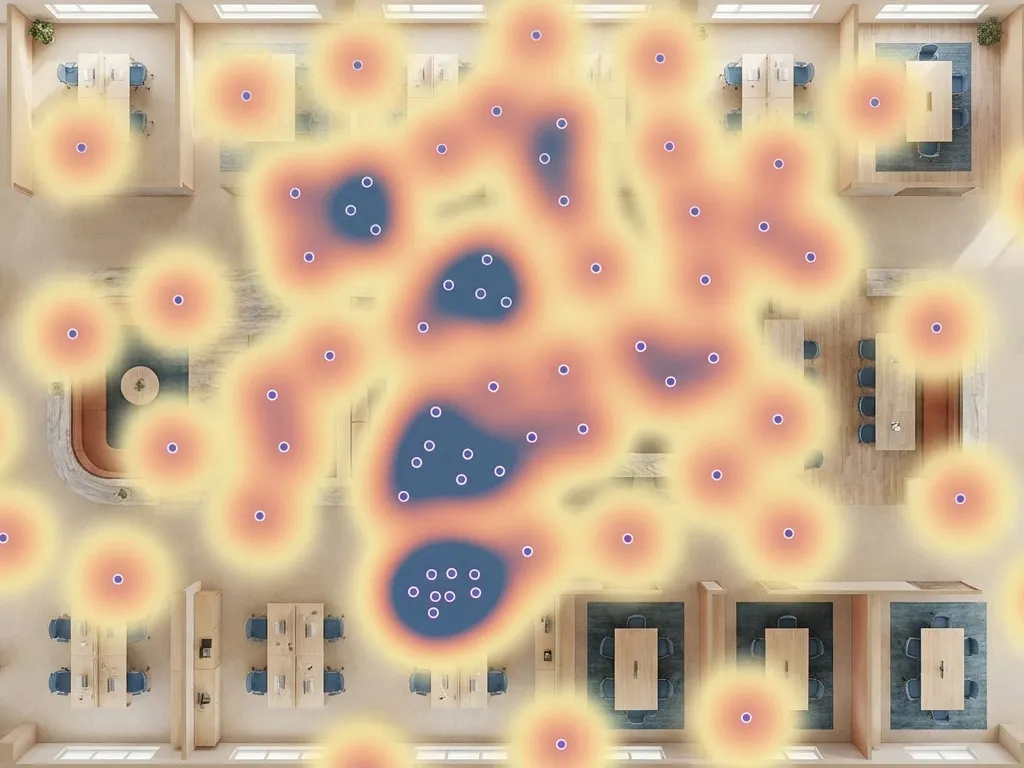
Try our tool
Workspace Alignment Index™: Measuring What Most Organizations Leave Unmeasured