A new operating system for the knowledge economy
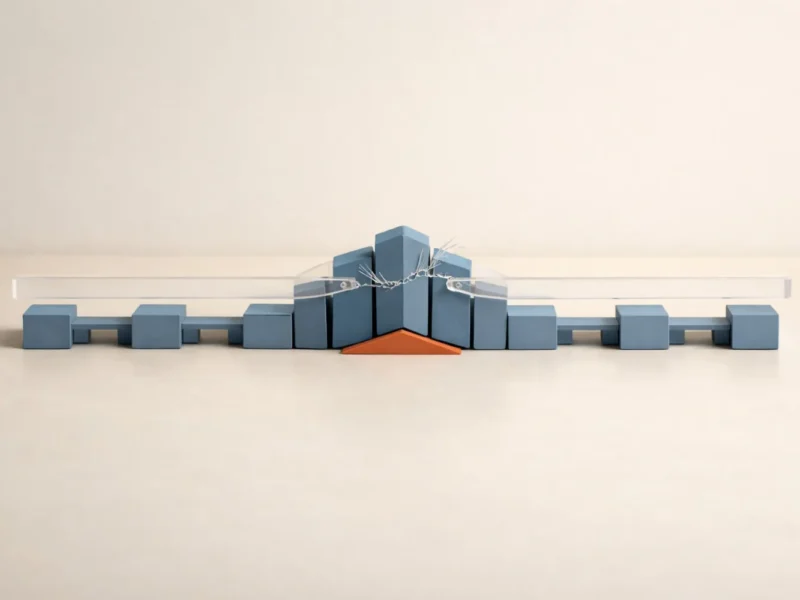
Limitless Workspace is not a place, nor a design trend. It is a systemic shift in how organizations conceive, use, and manage space in the knowledge economy.
For decades, the office has been treated as a fixed asset: a physical container designed to host people, structured around stability, hierarchy, and predictability. That model was coherent with a world where work was largely co-located, processes were linear, and organizational boundaries were clear.
That world no longer exists.
Today, work unfolds across distributed teams, hybrid patterns, and increasingly fluid organizational structures. Technology has decoupled productivity from physical presence. At the same time, talent expectations, cost pressures, and regulatory frameworks are redefining the economic and strategic role of space.
In this context, the office does not disappear. It evolves.
Limitless Workspace is the framework that makes this evolution intelligible.
From place to platform
The most important shift is conceptual before being physical.
The workplace is no longer a place where work happens. It becomes a platform that enables it.
Limitless Workspace describes a system in which space, people, technology, and organizational culture are interconnected and continuously reconfigured. It is not defined by a single location, but by an ecosystem of environments designed to support different modes of work.
In this paradigm, space is no longer static. It is adaptive, distributed, and intentional.
Organizations do not simply occupy offices. They orchestrate a network of environments—headquarters, hubs, satellite spaces, and on-demand locations—aligned with real operational needs.
The value of the workspace no longer lies in its ability to contain people, but in its ability to activate relationships, decision-making processes, and innovation.

A response to structural complexity
Limitless Workspace emerges as a response to a deeper transformation: the growing complexity of managing work.
Hybrid work has stabilized as a structural condition rather than a temporary adjustment. At the same time, the Total Cost of Occupancy has become increasingly opaque, fragmented across real estate, services, technology, and indirect costs. Organizations are required to balance flexibility with control, employee experience with efficiency, and short-term decisions with long-term adaptability.
This complexity cannot be managed through traditional real estate logic.
It requires a new operating model in which workspace is treated as a strategic variable. Not a cost to be minimized, but a system to be designed and governed.
In this sense, Limitless Workspace reframes a fundamental question.
The issue is no longer how much space is needed, but how space contributes to performance.
Redefining the boundaries of work
The term “limitless” does not imply the absence of boundaries. It implies the ability to redefine them continuously.
Between presence and remote work, between physical space and digital infrastructure, between fixed costs and variable models, between ownership and access.
The traditional office was built around stability. Limitless Workspace is built around adaptability.
This translates into environments that are accessed on demand, configured according to real usage, and supported by integrated services and technologies. The workspace becomes scalable, both economically and operationally, allowing organizations to respond to change without structural rigidity.
The boundary of the workplace is no longer the building.
It is the system that connects all the places where work happens.
The evolution of the office: from obligation to meaning
One of the most visible consequences of this shift is the transformation of the office itself.
In the traditional model, the office was a default destination. Presence was often implicit, sometimes imposed, and rarely questioned.
In the Limitless paradigm, presence requires meaning.
People return to the office not because they have to, but because the space enables something that cannot be replicated elsewhere: collaboration, learning, social interaction, and cultural alignment.
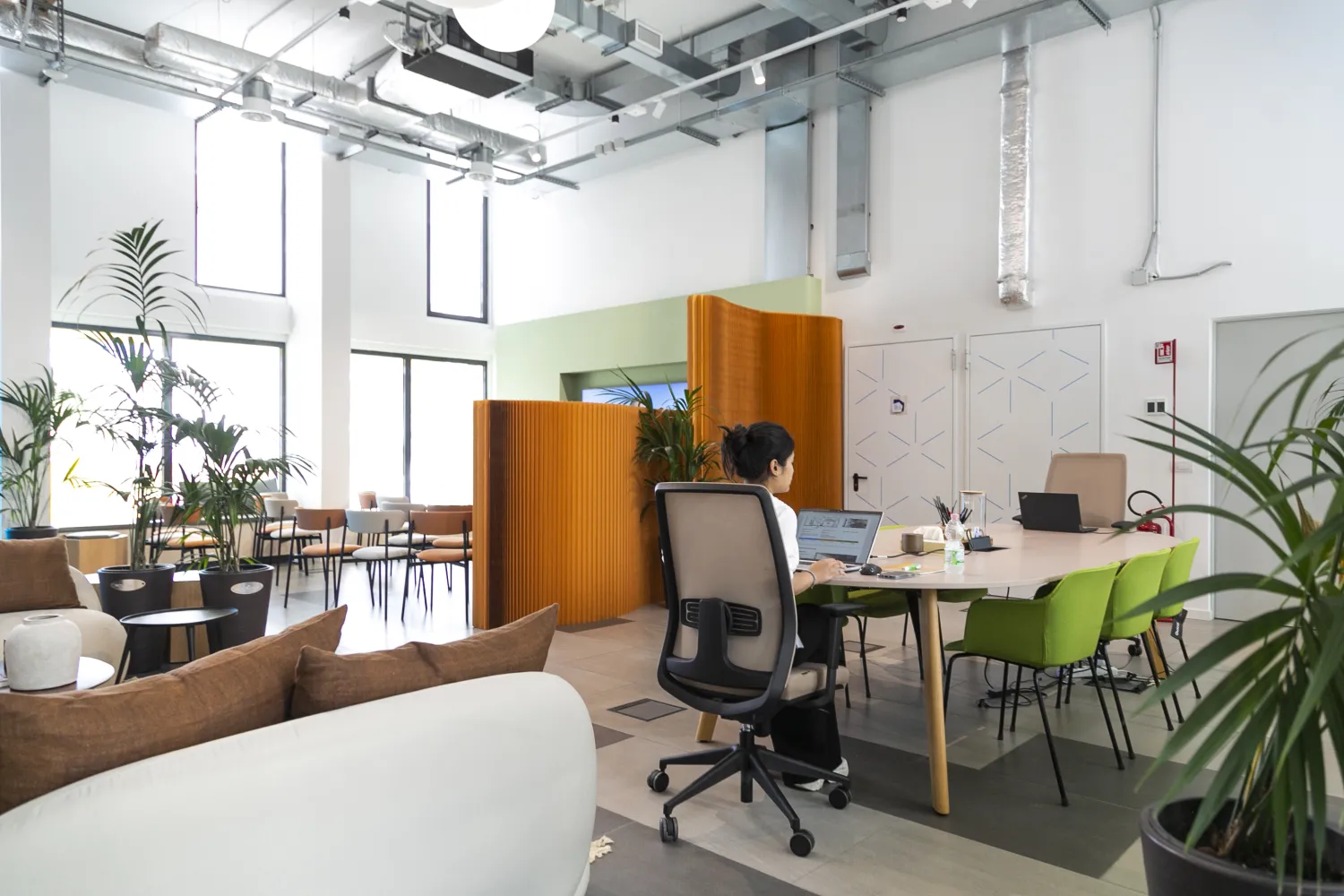
The office becomes a relational infrastructure. A place designed for moments of high intensity rather than continuous occupation. A platform for building social capital, reinforcing identity, and accelerating decision-making.
This is not a reduction of its importance. It is a redefinition of its function.
A distributed and intentional architecture
As organizations evolve, their spatial logic becomes increasingly distributed.
The centralized headquarters loses its exclusivity and becomes one node within a broader system. Around it, a network of complementary environments emerges: smaller hubs, proximity spaces, flexible offices, and third places.
This distributed model is not driven solely by efficiency. It reflects deeper strategic drivers: access to talent, organizational resilience, and the need to maintain cohesion in a fragmented context.
The challenge is not dispersion, but coherence.
Limitless Workspace provides the logic to design this coherence. It connects different locations into a unified system, ensuring that distribution does not lead to fragmentation, but to a more resilient and responsive organizational structure.
From asset to service
Another defining element of Limitless Workspace is the transition from ownership to access.
Workspace is no longer conceived as a static real estate asset, but as a service layer that organizations can activate according to their needs. This shift introduces a more flexible cost structure, reducing the rigidity of traditional long-term commitments and aligning expenditure with actual usage.
At the same time, it enables a higher level of professional management. Space is no longer just leased or owned; it is designed, operated, and continuously optimized as part of an integrated system.
This is the logic of Workspace as a Service: an approach where space, services, and technology converge into a single operational platform.
A new standard, not a trend
Limitless Workspace should not be interpreted as a passing trend or a niche model.
It reflects a structural transformation already underway across industries and geographies. The evidence is visible: hybrid work patterns stabilizing, real estate markets becoming more selective, and organizations investing in quality, flexibility, and experience rather than scale alone.
In this context, the workplace is no longer evaluated only in terms of square meters or location. It is assessed in terms of its ability to support people, enable collaboration, and adapt to change.
Limitless Workspace captures this transition.
It is at the same time a vision, a method, and a narrative framework. A way to interpret the present and design the future of work.
Work is no longer confined within buildings.
It is supported by a network of spaces, services, and infrastructures designed to evolve with organizations.
Limitless Workspace is the architecture of this network.