- 1In brief
- 2From the third to the fourth place: what changes
- 3Why the fourth place is emerging now
- 4The definition of the fourth place according to Limitless Workspace
- 5AHOMA: the Mediterranean fourth place
- 5.1AHOMA Montemagno, the first concrete example
- 6What this means for companies, properties and territories
- 7How to design a fourth place
- 8Frequently asked questions
- 8.1What is the fourth place of work?+
- 8.2Does the fourth place coincide with workation?+
- 8.3Does the fourth place increase productivity?+
- 8.4Where is AHOMA’s fourth place located?+
- 8.5Do you need a visa to work remotely from Italy?+
The origin of the concept, Limitless Workspace’s own definition, and a first Mediterranean embodiment in the AHOMA project.
In brief
- The third place, theorized by Ray Oldenburg in 1989, describes the informal public spaces between home and the office. Distributed work has eroded its boundaries and opened up the question of a fourth place.
- For Limitless Workspace, the fourth place is the inhabited territory where living, working and belonging coincide again over the long term.
- The growth of extended remote work and workation is shifting part of the value from individual buildings to territories capable of hosting life and work together: in the euro area, at least occasional work from home has nearly doubled between 2019 and 2024, from 11.7% to 22.4% (ECB, based on Eurostat data).
- AHOMA, a project of the Stella group, translates this idea into the Mediterranean, between Monferrato and western Sicily, finding in Montemagno its first concrete example.
- For companies, properties and territories, the fourth place becomes a lever for attracting talent and enhancing the value of places, with effects on work still to be measured on the ground.
The fourth place recombines, in a single environment chosen and designed with intention, the functions that modernity had distributed across home, office and public space. The dominant narrative asks the office to earn the commute; the fourth place works in the opposite direction, starting from a place worth being in and installing work there as one of the functions of living. In the Mediterranean, AHOMA offers a first embodiment of this.
From the third to the fourth place: what changes
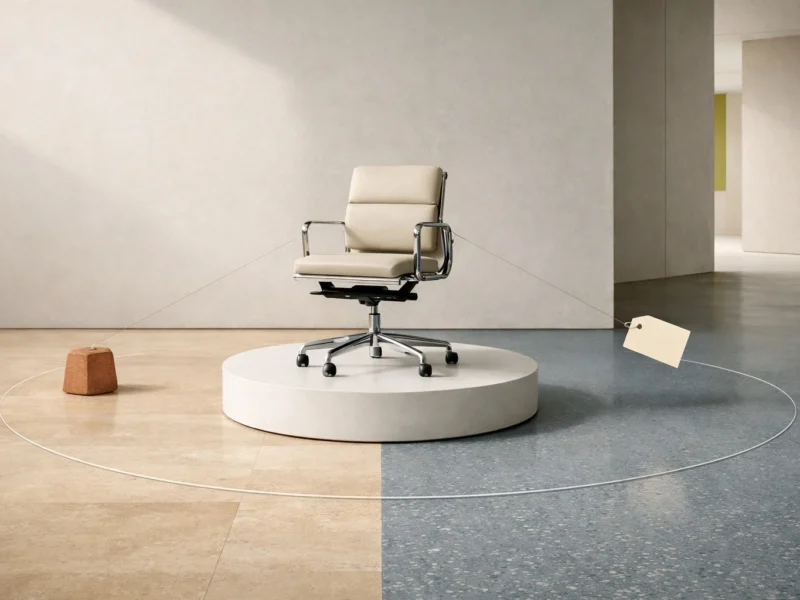
The concept descends from that of the third place, coined by sociologist Ray Oldenburg in The Great Good Place (1989). Oldenburg distinguishes the first place, the home, the second place, work, and the third place: the informal public space where people meet voluntarily, from the café to the bookshop, from the bar to the library.
Oldenburg attributes eight recurring qualities to these environments: neutral ground, a social leveling function, conversation as the main activity, accessibility, the presence of regulars, a low profile, a playful tone, and the feeling of being at home away from home , and turns them into the connective tissue of community. Coworking then sought to occupy that intermediate space, adding connectivity and shared desks to the café experience.
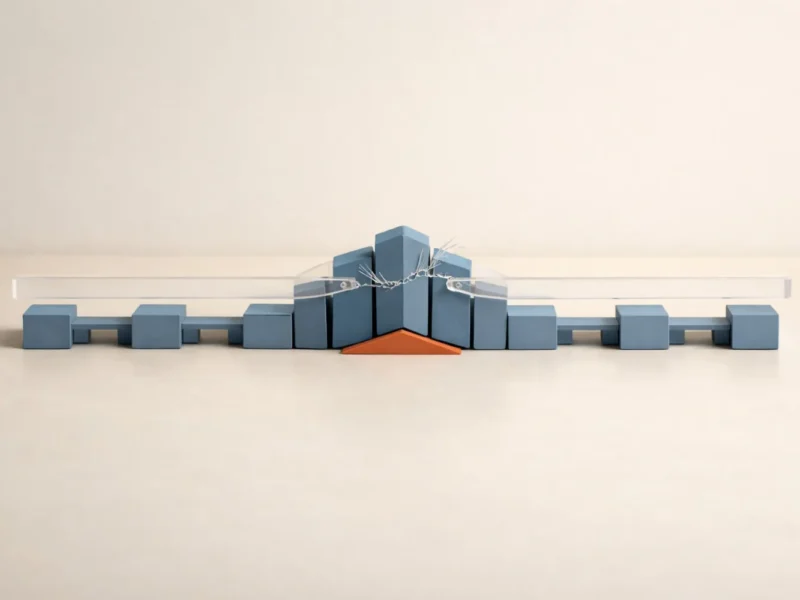
The expression fourth place is used today with different meanings, and the literature has not converged on a single definition. The most solid genealogy starts with Oldenburg and continues with the typology proposed by Arnault Morisson for the knowledge economy (2018-2019): combining functions, coliving unites home and work, coworking unites work and sociality, and the fourth place holds all three together, in a concise formula of living, working and socializing. Alongside this line, other meanings coexist: Patricia Simões Aelbrecht (2016) applies the expression to intermediate urban spaces where spontaneous sociality among strangers arises; Yang, Bisson and Sanborn, in the Journal of Corporate Real Estate (2019), describe coworking as a third-fourth place; a further strand applies the term to digital environments.
A consolidated definition of the fourth place is therefore still lacking.
Why the fourth place is emerging now
Two pressures converge. The first is the decline of third places and the rise of social isolation: according to IE University, in 2024, 17% of Americans reported having no close friends, compared with 2.5% in 1990, while around 35% of Europeans report at least occasional loneliness. The second is hybrid work, which has reduced the separation between the first and second place: the home has also become a workspace, and the office has lost its monopoly on production. Hence the push to rethink the office as a relational destination, a trend documented in the 2025 and 2026 analyses on the destination office and Return on Commute.
The structural conditions behind the phenomenon are solid. According to the European Central Bank, based on Eurostat data, in the euro area the share of employees aged 20 to 64 working from home at least occasionally rose from 11.7% in 2019 to 22.4% in 2024; between 2024 and 2025 the picture appears stable, and the hybrid model remains the most widespread and preferred configuration. At the same time, work mobility is growing. MBO Partners estimates 18.5 million digital nomads in the United States in 2025, up 153% from 2019, and notes a trend toward slomading, meaning fewer destinations and longer stays, averaging 6.4 weeks per stop. This figure refers to the United States and is based on self-identification, so it should be read as a U.S. benchmark.
Specific demand for workation is economically plausible, while its measurement remains uncertain. A commercial forecast by MarketIntelo, updated in 2026, puts the global workation market at 63.5 billion dollars in 2025, growing to 243.8 billion by 2034, with a European share of 28.6%, equivalent to roughly 18.2 billion dollars. The same source does not disclose its full methodology, so the figure describes a possible order of magnitude and should be treated as a commercial forecast. On the business travel front, which represents the reference pool for bleisure, GBTA estimates European spending of 360.4 billion euros in 2024 and 389.9 billion expected in 2026, while Eurostat records over 123 million business trips with an overnight stay within the Union in 2024. GBTA itself reports that, as of October 2025, 43% of corporate travel programs had defined policies for blended travel.
The regulatory framework is also keeping pace with the phenomenon. The OECD notes that the first visas dedicated to digital nomads appeared from 2020 onward, and that in November 2025 the Model Tax Convention was updated to account for short-term cross-border remote work. In Italy, the visa for digital nomads and remote workers has been operational since 2024 for highly qualified activities, with a duration of up to 365 days. On these matters, verification should always be updated before any publication, because the visa addresses only the immigration dimension and leaves taxation, social security, labor law and duty of care open.
The definition of the fourth place according to Limitless Workspace
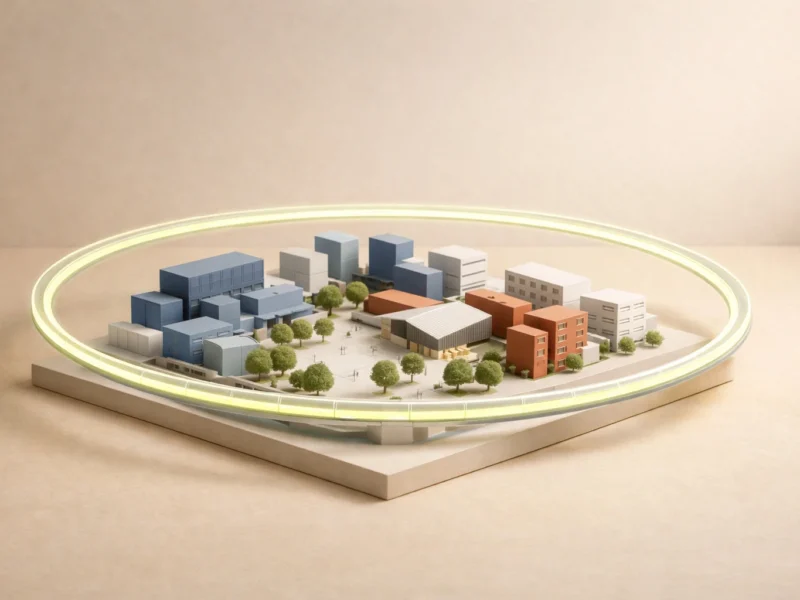
Limitless Workspace adopts its own definition: the fourth place is the inhabited territory where living, working and belonging coincide again over the long term. The definition brings together the corporate real estate strand, which reads coworking and co-living as a third-fourth place, and the hospitality-driven destination-office strand, adding the dimension of long time and of dwelling, which other interpretations tend to overlook.
This is where the reversal lies. The destination office asks the workspace to earn its “commute” through services and experiences. The fourth place moves in the opposite direction: the person first chooses a place worth being in, and work settles there as one of the functions of living, alongside rest, relationships and self-care.
In the Limitless Workspace model, work is a distributed system of places, services and relationships: home offers autonomy and individual focus, the headquarters safeguards identity and culture, and proximity hubs ensure accessibility and widespread operational capacity. The fourth place occupies the regenerative, territorial node, activated in moments that call for depth, realignment, intense relationship, or a different quality of time.
AHOMA: the Mediterranean fourth place
AHOMA (Ahoma Mediterranean Living) is a contemporary Mediterranean workation and living project. It offers stays in selected homes, experiences curated with local partners, and an editorial magazine. The name evokes Haoma, an ancient archetype of regeneration and individual responsibility, translated into a different way of living, traveling and working: slowing down without stopping, choosing without giving up, living with greater intention.
The offering is organized around four axes – Spirit, Mind, Body and Relationships – completed by two enabling factors, Territory and Design. Spirit concerns clarity of purpose and personal direction; Mind, the conditions for deep thinking and the reduction of cognitive noise; Body, the physical quality of the stay, from light to sleep to movement; Relationships, voluntary sociality and trust. Territory enters as an active component of the experience, through people, culture, food and landscape, and design operates as an everyday language, with essential materials, natural light, and a beauty that improves the legibility, durability and usability of the space. AHOMA thus develops its own Mediterranean, regenerative interpretation of the fourth place, which it openly declares to be a proprietary reading of a concept developed in the literature.
AHOMA Montemagno, the first concrete example
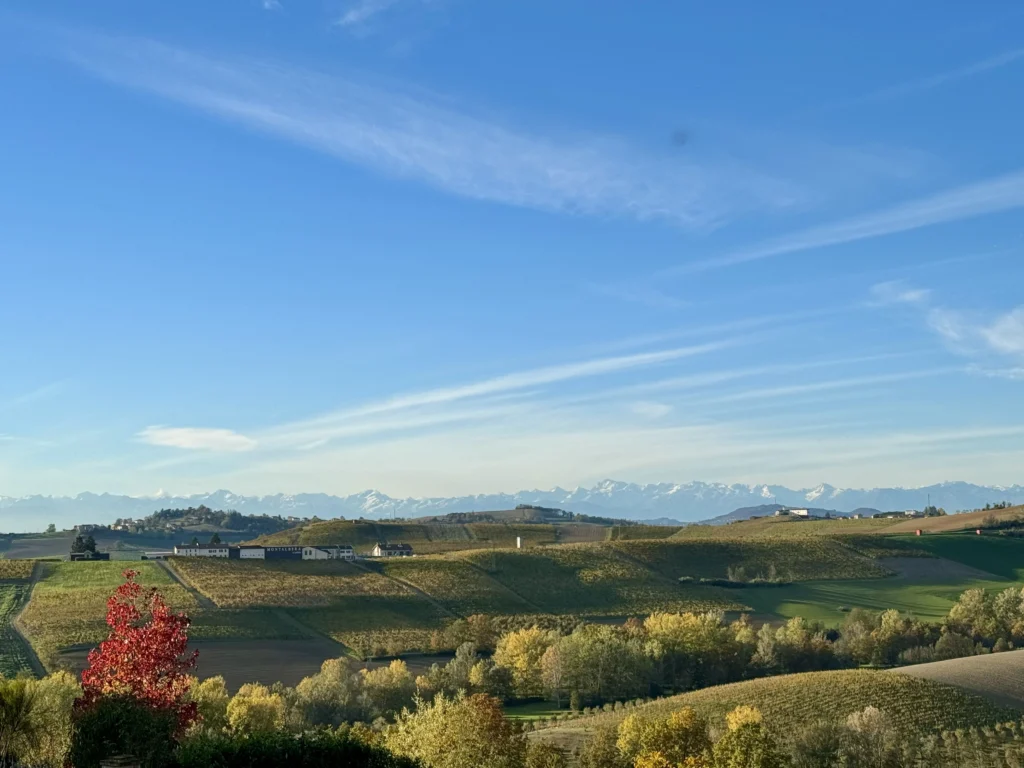
Montemagno is a village of around 1,100 inhabitants in the province of Asti, in the heart of the wine-growing hills of Monferrato, a UNESCO World Heritage site since 2014. Its location combines genuine accessibility with qualitative seclusion: about an hour from Milan, thirty minutes from Turin toward Asti, a motorway a few minutes away, fiber-optic connectivity available, and, all around, wineries, osterias and walking paths among the vine rows. It is the kind of setting in which the fourth place stops being a category and becomes an experience.
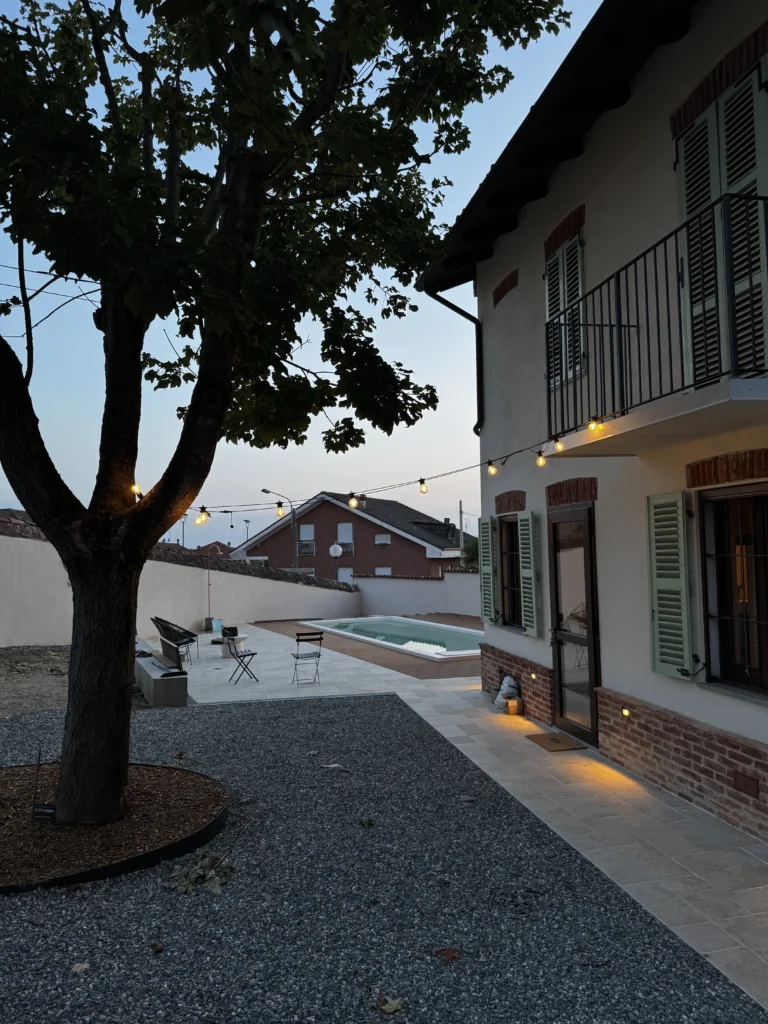
The AHOMA houses in Montemagno are designed to hold work and life together without forced hierarchies: they function as private offices during focused work hours and as real homes the rest of the time, with reliable connectivity, essential design consistent with the territory, and a direct relationship with the landscape that enters through every window. Stays adapt to different lengths, short, medium and long term: a week of intense work and recovery, a month of remote working immersed in Monferrato, or a longer period for those who want to try temporary living as an alternative way of life. The stay is part of a broader ecosystem, made up of local experiences, sport, yoga, a curated community, and editorial content that helps guests find their bearings. In this reading, Montemagno is the first concrete proof of the Mediterranean fourth place, the distinctive mark through which AHOMA expresses the concept.
What this means for companies, properties and territories
For corporate and HR leadership, the fourth place becomes a lever for attraction and retention, within employer branding and benefits strategies. The evidence should be used with care: a randomized controlled trial at Trip.com, published in Nature, shows that a hybrid model with two days working from home reduced resignations by a third without worsening measured performance, with the person still remaining in their own living area. A Harvard Business School study on the USPTO found a 4.4% increase in output when moving to work from anywhere, in a context of individual, standardized and measurable tasks. The useful takeaway is that performance depends on the quality of the organizational model, and the fourth place is best framed as an intentional moment, to be activated when home, office and coworking do not offer the most suitable configuration.
For landlords and hospitality operators, value shifts from the single building to the territory capable of hosting life and work together, where hospitality, services and experience become drivers of returns. Physical proximity retains a role that fully remote work struggles to replicate: research in Nature Human Behaviour, conducted on more than 61,000 Microsoft employees, links fully remote work to more static collaboration networks organized in silos, while the MIT Senseable City Lab estimates the loss of thousands of weak ties during the remote-work period. A carefully designed fourth place can recreate opportunities for encounter, unplanned conversation and the exchange of tacit knowledge, provided it combines privacy and deep work with legible common spaces and voluntary sociality.
For advisors, a new category is opening up, one to be read and mapped at the intersection of flex, hospitality and workation, with usage and experience metrics still to be standardized. The Italian case illustrates well the caution required: estimates on 2025 business travel diverge depending on scope, with 34 billion euros according to the international GBTA model and 21.5 billion according to the Business Travel Observatory of the Politecnico di Milano and the University of Bologna, referring to Italian companies. The two figures have different methods and universes and should be kept distinct.
How to design a fourth place
A fourth place is designed by orchestrating five integrated conditions. On the spirit dimension: customizable rhythms, rituals for starting and closing the day, and a genuine possibility of disconnecting. On the mind dimension: privacy, acoustics, ergonomics, reliable connectivity, and a variety of settings for different activities. On the body dimension: air quality and ventilation, natural light, thermal comfort, sleep, movement and nutrition; on this point, the COGfx research from the Harvard T.H. Chan School of Public Health documents significantly higher cognitive scores under conditions of better air and enhanced ventilation, evidence that concerns cognitive function under experimental conditions and remains distinct from economic performance. On the relationships dimension: common spaces, host or community management, and light activities that encourage voluntary encounters. On the territory dimension: local partners, culture, materials and landscape as active parts of the experience.
The quality of the design is verified in the field. An essential checklist, useful both at the design stage and as a basis for measurement:
- Spirit – Does the place help clarify intentions, priorities and direction for the stay?
- Mind – Are there genuine conditions for concentration, creativity and reduced cognitive noise?
- Body – Do light, sleep, comfort, movement and nutrition support the quality of the stay?
- Relationships – Do spaces and activities facilitate voluntary, meaningful relationships?
- Territory – Does the stay create an authentic relationship with local people, culture, nature and activities?
- Design – Do materials, proportions and layout facilitate use, durability and functional beauty?
- Work readiness – Do connectivity, ergonomics, privacy and acoustics allow professional-quality work?
- Time autonomy – Can the person freely organize focus, relationship, rest, exploration and disconnection?
The first peer-reviewed studies on workation, such as the one published in the Journal of Hospitality and Tourism Management, find positive associations between experience satisfaction, engagement, innovative behavior and intention to stay, alongside concerns about safety and the boundaries between work and private life. Causal evidence remains limited, which is why the most defensible promise concerns the conditions created by the place, to be verified through a structured measurement program covering focus, energy, quality of interactions, goal achievement and intention to return.
Frequently asked questions
It is the space that integrates the functions of home, office and social spaces, adding to them a conscious choice of spatial quality, community, philosophy and territorial rootedness. For Limitless Workspace, it is the inhabited territory where living, working and belonging coincide again over the long term.
Workation describes a mode of use, that is, working from a destination for a period of time. The fourth place describes a broader design category, one that includes professional infrastructure, design, relationships and a connection with the territory. Workation can take place within a fourth place, where it finds better conditions.
The available evidence is mixed and partly still emerging. Geographic flexibility has increased output in individual, measurable contexts (Harvard Business School, USPTO), and hybrid work improves retention and satisfaction without harming performance (Nature, Trip.com), while the Bank of Italy finds no automatic average effect. Performance depends on the quality of the organizational model, and any specific effect of the fourth place needs to be measured case by case.
Currently in Monferrato, with Montemagno as the first concrete example, and in western Sicily, between the Trapani area and the Egadi Islands. The project has just begun and will grow over time to include other Mediterranean locations.
A European Union citizen can work in Italy without a work permit. For non-EU citizens, Italy has a visa for digital nomads and remote workers, operational since 2024, valid for up to 365 days, with a residence permit to be requested within eight working days of entry. The visa covers only the immigration dimension: taxation, social security, labor law, insurance and cybersecurity must be verified separately and kept up to date before any decision.