How strategy, people and space converge into an evolving operating model
In the ongoing transformation of the workplace, some organizations are approaching the topic with a particularly intentional mindset, not as a matter of space optimization, but as a lever for organizational performance, culture, and strategy.
In this conversation with Marco Benvenuti, HR Site Services Manager at Eli Lilly Italy, Corporate Communication and CSR Manager, a clear perspective emerges: the workspace is no longer a container, but an active infrastructure enabling collaboration, innovation and quality of work.
Two real estate models, one organizational logic
Eli Lilly’s corporate real estate strategy is structured along two distinct yet complementary dimensions: on one side, manufacturing sites, typically owned; on the other, spaces supporting commercial functions, managed through more flexible models.
This distinction reflects the nature of the organization itself. Manufacturing requires stability, control and long-term investment. Commercial functions operate in a more dynamic environment, where accessibility, proximity and adaptability become critical factors.
In Europe, and particularly in Italy, a hybrid configuration emerges. In Florence, manufacturing and corporate functions coexist within the same campus, while Milan and Rome act as strategic nodes within the broader organizational network.
This geography is not incidental. Florence is rooted in historical decisions, while Milan and Rome respond to contemporary needs: proximity to institutions, access to markets, and presence in key decision-making environments.
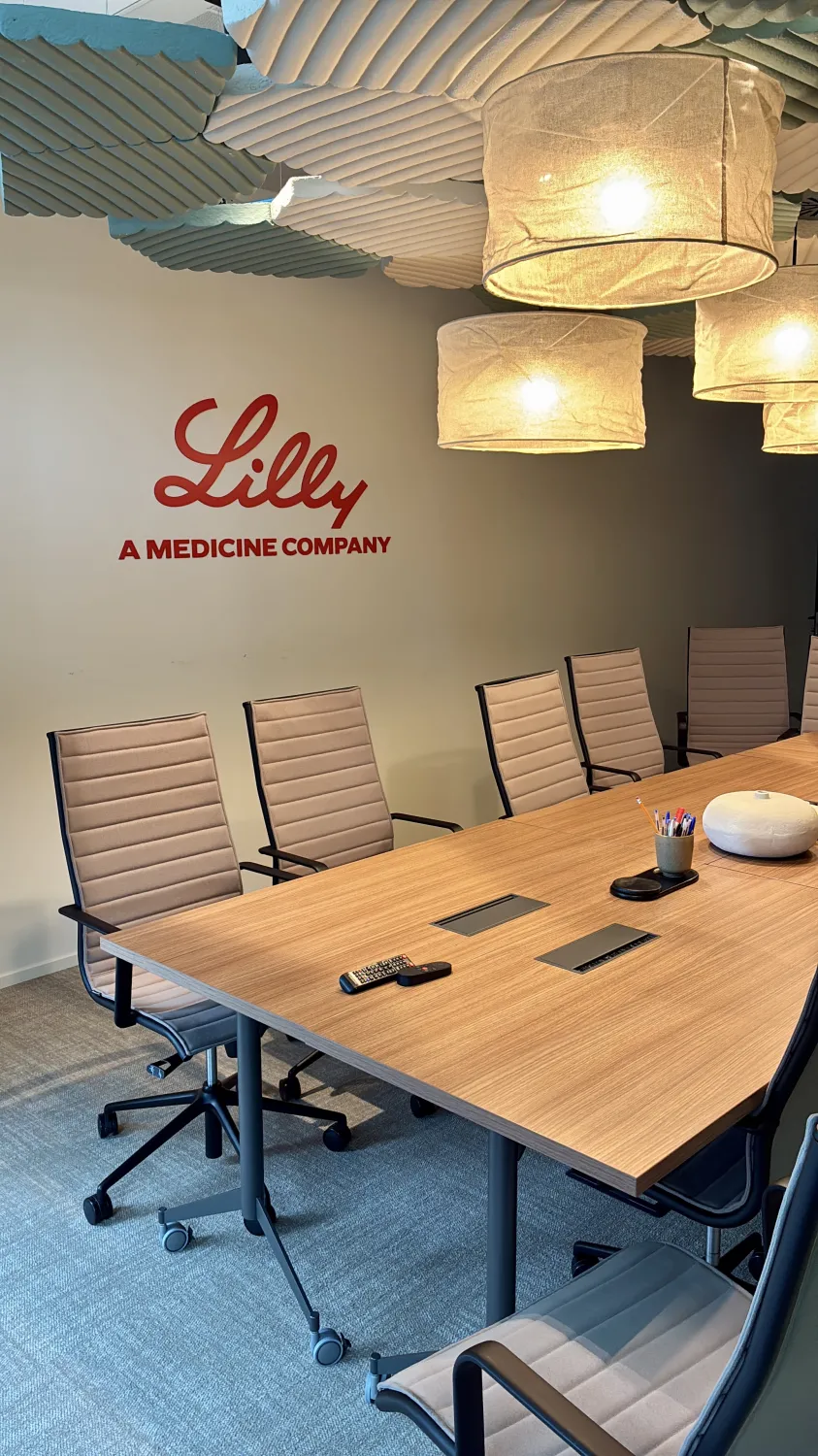
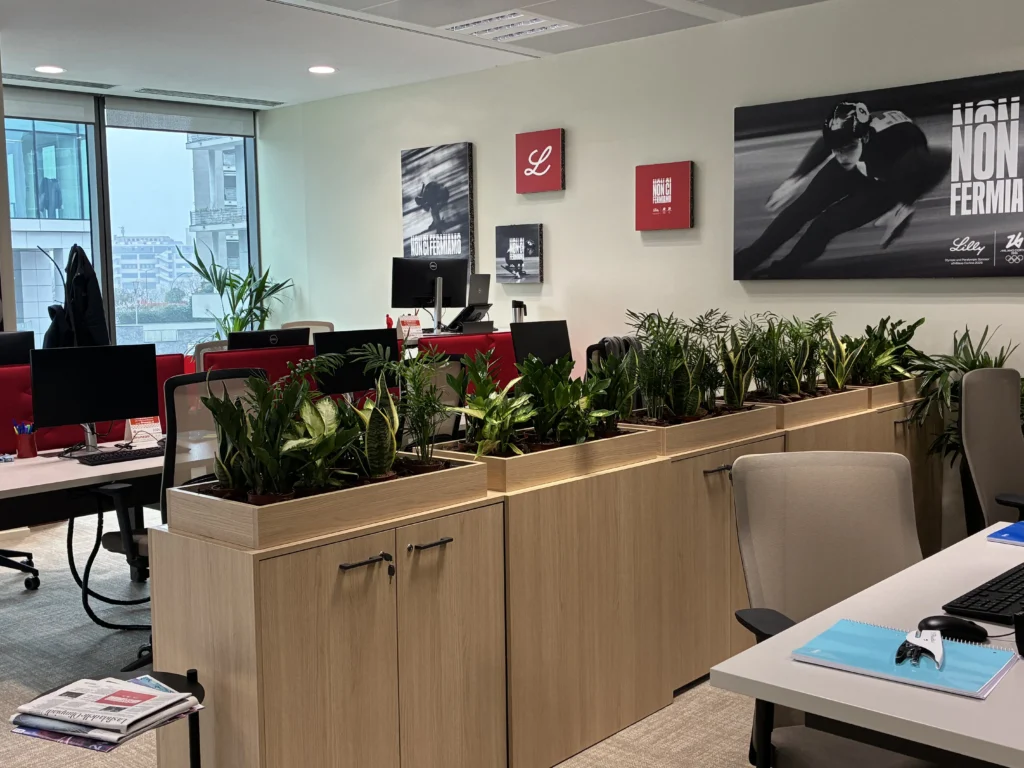
Eli Lilly in Stella Santa Giulia
From space as a cost to space as an enabler
Within this framework, office choices are not driven by a single standardized approach. Instead, Lilly combines different solutions: traditional leases, as in Rome, and flexible or serviced workspaces, as in Milan.
The distinction is not only real estate-related, but operational.
In Milan, the choice of a flexible workspace was deliberate. Not merely opportunistic, but aligned with specific needs: greater agility, faster activation, and the ability to position a team within a more dynamic and relational environment.
This is a key point. Space is not selected solely based on cost or location, but on its ability to support specific business functions and ways of working.
In particular, for the consumer division, the workspace has been conceived as a lever to foster openness, interaction and cross-functional exchange.
Contamination as an organizational lever
One element stands out clearly: working in multi-tenant environments is not perceived as a risk, but as an opportunity.
Exposure to other companies, cultures and organizational models is seen as a positive driver, especially in evolving business areas.
This represents a meaningful shift. Many corporates still approach workspace with a logic of control and separation. In this case, the value of proximity and interaction is explicitly recognized.
While it is still early to fully assess outcomes, initial feedback on the Milan experience has been highly positive, both in terms of spatial quality and in the ways of working it enables.
From open space to activity-based working
From a design perspective, Lilly positions itself between traditional models and more advanced workplace strategies.
Historically, the organization adopted open space layouts, with a gradual reduction of private offices. This reflects a broader global trend toward accessibility, flatter hierarchies and increased collaboration.
However, the evolution goes further.
More recent environments integrate a more articulated approach, aligned with Activity Based Working principles: differentiated spaces, social areas, informal environments and the absence of fixed desks for commercial teams.
The objective is not simply space efficiency, but cross-functionality. People move across spaces depending on the activity, increasing opportunities for interaction and knowledge exchange.
Even elements such as internal cafeterias or shared areas take on a strategic role, becoming places for work as well as social interaction. This reflects a broader shift observed in advanced workplace models, where relational dynamics are an integral component of performance.