A conversation with Alessandro Serena, Cushman & Wakefield
The Italian office market is not contracting, it is becoming more intentional.
What emerges from the conversation with Alessandro Serena is a shift that is both gradual and structural. Over the past fifteen years, and with a clear acceleration after 2020, companies have started to redefine what they expect from office space. Not in terms of quantity, but in terms of meaning and function.
Demand has not disappeared. It has concentrated.
Today, three variables shape almost every real estate decision: quality, location and experience. These are no longer differentiators, they are entry conditions.
Pietro Martani: How has the “flight to quality” evolved in the Italian office market?
Alessandro Serena: This is not a recent trend, it started around 2010, when new players introduced concepts like sustainability, ESG and overall quality into the Italian market.
Before that, quality was mostly associated with location or the type of building. With projects like Porta Nuova and CityLife, companies began to see the office differently, not just as a physical space, but as a tool for communication and positioning.
There was a growing focus on energy performance, environmental impact and employee wellbeing. After Covid, this became even more evident. Companies realized that without these elements, they were less competitive.
At the same time, large corporates, especially in tech, led the way, moving into newer, more advanced buildings and setting new expectations for the market.
Pietro Martani: What role does location play today in office decisions?
Alessandro Serena: Location has become central again, but with a different meaning.
It is no longer just about being in a prestigious address. Companies are looking for places that are well connected, rich in services and embedded in a dynamic urban context.
There is a strong desire to be in environments where people feel part of something, where there is energy, accessibility and proximity to other businesses.
This has a direct impact on talent attraction and retention. Being in the right place today means being in an ecosystem, not just in a building.
Pietro Martani: How are companies redefining the role of the office?
Alessandro Serena: The real shift happened after Covid.
We all realized that individual work can be done effectively from anywhere. So companies started questioning the role of the office.
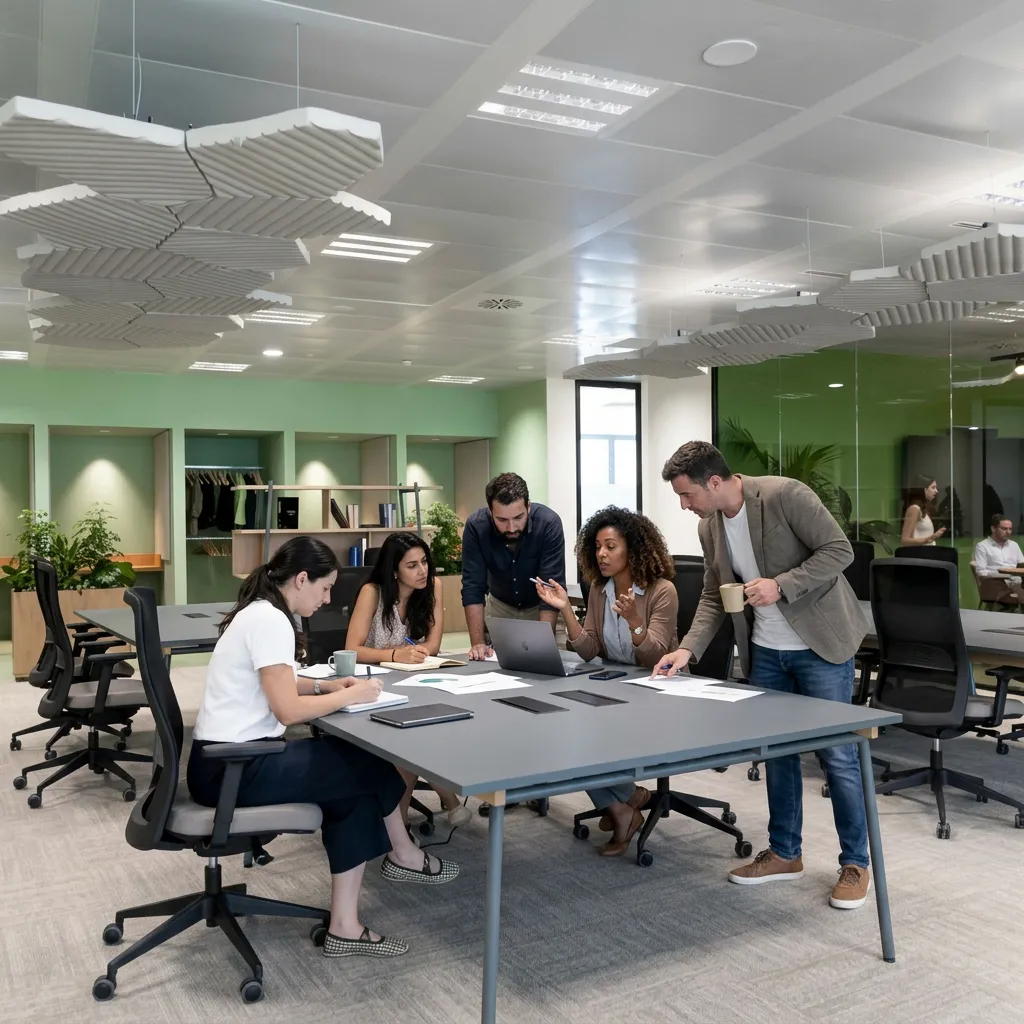
The answer is that the office is no longer primarily a place for individual productivity. It is becoming a place for interaction.
This has led to a reconfiguration of space: fewer desks, more meeting rooms, more informal areas and more social environments.
From a financial perspective, companies are reducing their footprint while moving to higher-quality buildings. They often accept higher rents per square meter, but balance this by taking less space.
The result is not necessarily cost reduction, but a more efficient use of space, one that supports collaboration, culture and alignment.
This reflects a broader shift where the office is no longer a passive container, but an active component of organizational performance.
Pietro Martani: Can we say that the office is becoming more of a “club” than a workplace?
Alessandro Serena: In many cases, yes.
We are seeing companies creating spaces that function as relational hubs, places designed for meeting, interaction and representation, rather than daily individual work.
Some organizations even separate functions: keeping operational activities in secondary locations while using central offices as social and client-facing environments.
This reflects a broader transformation where the value of the office lies in the quality of interactions it enables.
Pietro Martani: How important is it for the office to reflect a company’s identity?
Alessandro Serena: It has become extremely important.
When you enter an office today, you immediately understand the company behind it.
A young tech company will express openness, informality and social interaction. A law firm will communicate solidity and structure.
The office is now a communication tool, not only internally for employees, but also externally for clients.
If it is well designed and aligned with the company’s values, it can strengthen credibility and even support business development.
Pietro Martani: Is workspace as a service a temporary trend or a structural shift?
Alessandro Serena: It is definitely structural, but with a specific positioning.
There was a moment when it seemed that flexible offices could replace traditional ones. Today, we see a more balanced scenario.
Flexible solutions are very effective for certain needs: entering a new market, managing temporary growth, or maintaining operational flexibility.
At the same time, the model itself is evolving toward more community-driven and experience-oriented environments, closer to clubs than traditional serviced offices.
Pietro Martani: Why is it still difficult for landlords in Italy to adopt flexible models directly?
Alessandro Serena: The main reason is structural and linked to how the market works.
In Italy, long-term leases are still the preferred model because they maximize asset value. Investors rely on stable contracts to ensure predictable returns.
Flexible models, by definition, introduce more variability. This makes them less aligned with traditional capital market expectations.
As a result, landlords are still cautious in developing workspace-as-a-service solutions at scale.
Pietro Martani: So flexibility remains a complementary element within buildings?
Alessandro Serena: Exactly.
In many cases, flexible space represents a smaller portion of the building, often around 10%, but it plays an important role in enhancing the overall attractiveness of the asset.
It is not replacing traditional offices, but integrating them.
Pietro Martani: How relevant are amenities in today’s office market?
Alessandro Serena: They are essential.
Today, companies expect buildings to offer a range of shared services, restaurants, gyms, meeting facilities, event spaces.
These elements extend the office experience and are often decisive in the selection process.
In many cases, the presence and quality of amenities can make the difference between choosing one building over another.
About Cushman & Wakefield
Cushman & Wakefield is a global real estate advisory firm active across leasing, capital markets and advisory services.
In Italy, the company operates primarily in the office sector, working with both occupiers and landlords to support leasing processes and interpret market dynamics.
Its activity reflects the increasing complexity of the office market, where decisions are influenced not only by space requirements, but also by organizational models, location strategies and evolving workplace expectations.